
Columbia County Tax Records by Field
Columbia County property tax records pair two views of the same parcel. The municipal assessor builds the assessment and runs its review steps. The Ascent system then ties that parcel to its tax-year detail. The Treasurer's office handles collection and payment questions. Equalized value sits apart from all of this. It is a state measure meant for comparing municipalities. So keep it in a different column than a parcel's local assessed value on the tax roll.
| Field | What It Shows | Where |
|---|---|---|
| Assessed value | Local parcel value used in the assessment process. | Municipal assessor and the county roll. |
| Equalized value | State-level municipal comparison measure. | Wisconsin Department of Revenue reports. |
| Tax-year detail | Bill and year choices tied to a parcel. | Ascent, Taxes detail, then a selected year. |
| First installment | Local collection for the first payment period. | Municipal treasurer. |
| Later installment or delinquency | County-handled later payment and overdue balance. | Columbia County Treasurer. |
An assessment is not an appraisal. A tax bill is not a sale receipt. The bill reflects the parcel, the year, and the taxing authorities applied to that roll. A recorded conveyance, by contrast, documents a transfer and may show consideration. Keep property tax records and deed records separate. Weigh a bill against a recent sale on its own terms.
Find a Columbia County Tax Bill
The county Treasurer maps a direct route from an Ascent parcel to the bill. Start with an address or parcel in the public search. Open the parcel's red link, choose Taxes in Select Detail, then pick a year. A street search can return more than one result. When it does, compare the municipality and site address before opening the bill. The parcel key joins the tax detail to the land more reliably than a postal city label ever will.
- Search Ascent by a street name without its Road, Street, or Highway suffix, or use the municipality and parcel fields.
- Open the parcel and choose Taxes in the Select Detail menu.
- Select the tax year that matches the bill or payment question.
- Use the Treasurer's instructions to confirm the correct installment office and current payment method.
- Assessed value
- The local assessor's value assigned to the parcel for the roll.
- Equalized value
- A Wisconsin Department of Revenue measure used to compare municipal value levels.
- Tax year
- The year selected in the parcel's tax detail; it should match the bill being reviewed.
- Delinquent tax
- An unpaid tax handled by the County Treasurer after the local collection stage.
Use Columbia County's Ascent Tax Search
Ascent is the county's public parcel and tax search. Its recorded search fields let you begin with an address, an owner, a parcel identifier, a mailing address, or survey details. Keep the search narrow. The county's own advice is "less is best," and the street-name field works best without a suffix. Results can then be opened to the selected tax-year detail.
| Ascent Field | Input | Tax-Record Use |
|---|---|---|
| Municipality | Select county municipality | Separates postal city from tax jurisdiction. |
| Parcel ID | Municipality code plus parcel remainder | Join a known parcel to its tax detail. |
| Street number and name | Address without street suffix | Find a parcel when the situs address is known. |
| First and last name | Owner name | Find parcels when the bill or address is not at hand. |
| Mailing address | Notice delivery address | Check where owner mail is directed. |
| USPLS and tags | Survey clue or tag | Useful for rural land without a standard street address. |
The Ascent public search page displays those search routes, and a result table carries the parcel, owner(s), site address, privacy expiration date, and tax years.
| Parcel | Parcel identifier used to open the tax detail. |
|---|---|
| Owner(s) | Name field shown with the parcel result. |
| Site address | Physical address associated with the parcel. |
| Tax years | Available year choices for the tax record. |
Route Columbia County Tax Payments
Columbia County splits its tax collection between two offices. The first installment goes to the local municipal treasurer by January 31. The County Treasurer collects second installments and delinquent taxes. A parcel may sit in a town or village. Its postal address can still carry a nearby city's name. Confirm the municipality on the parcel before deciding where a payment belongs. The lookup finds the bill; it never changes which office handles a given installment. Fees deserve a careful look as well. The county Treasurer's due-date page lists Point & Pay convenience fees. Check the live fee and payment screen before finishing a transaction. The charge depends on the payment method. An online convenience fee is not part of the assessment. The Treasurer's payment page lists the due-date path and payment fees.
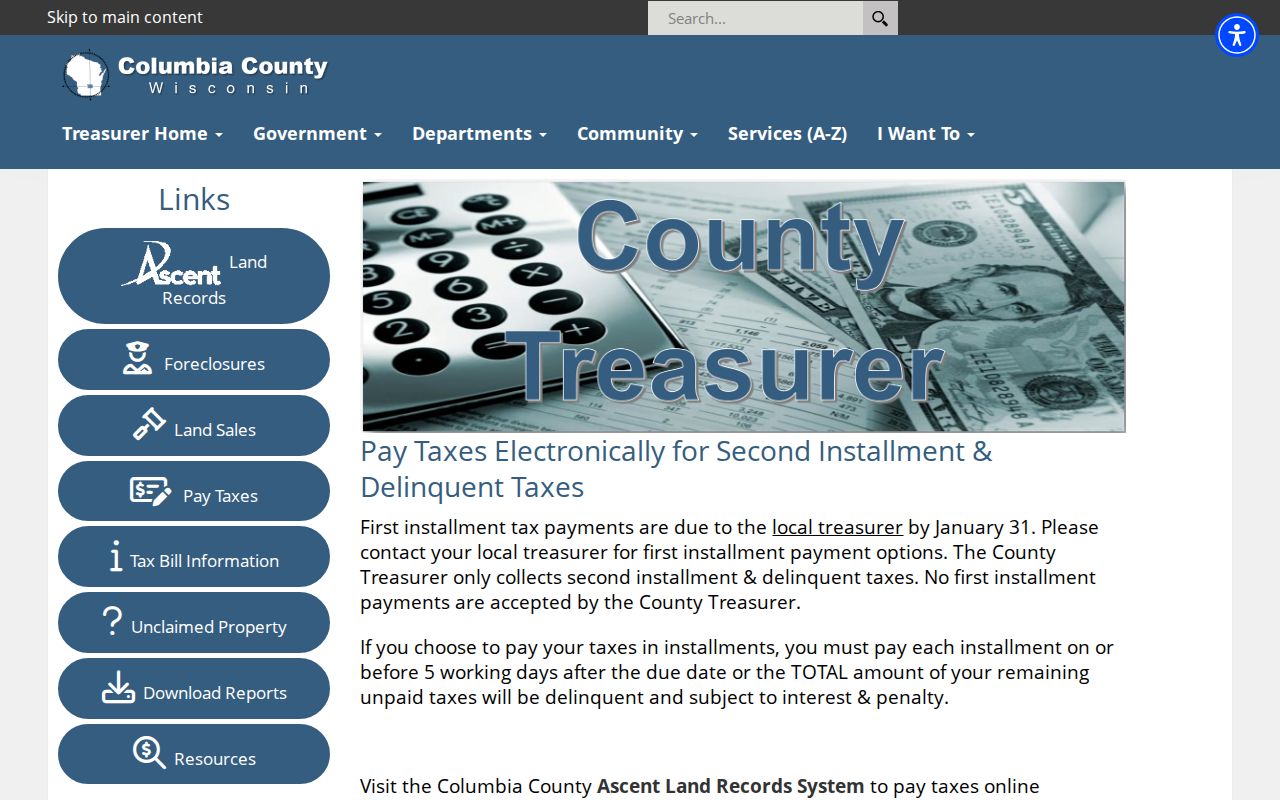
This county payment information helps distinguish local collection from later county collection.
Separate Columbia County Assessed and Equalized Values
The local assessed value belongs to a parcel on the municipal tax roll. Equalized value is a Wisconsin Department of Revenue measure for comparing values among municipalities. They answer different questions. They may not match. Neither one is a sale price. A recorded transfer return or deed relates to an actual conveyance, while the assessment process applies its own valuation standard and parcel description. The DOR's assessment guidance describes a January 1 valuation standard and explains how ratios work. A sale must also pass a usability test before it informs the assessment. This distinction matters when owners compare a tax bill with a recent transfer. The deed records what was conveyed. The assessor records the value used in the roll. The Columbia County property-value page separates those measures in more detail.
Columbia County Assessment Maintenance
Wisconsin's major-class assessment rule links a municipality's assessment level to the state's equalized value. The Department of Revenue's guidance sets a five-year compliance test and a 10 percent threshold for a major property class. It is a statewide maintenance rule, nothing more. It does not promise that every parcel gets inspected on the same schedule or that every value moves by the same percentage. For Columbia County parcels, start by identifying the municipality and the property class. Then read the local assessment notice and the DOR report for the matching year. A townwide ratio cannot pin down the value of one lot. Parcel-level questions go to the municipal assessor. County Land Information coordinates the roll and parcel data. Wisconsin DOR explains the major-class rule and its five-year / 10 percent framework.
Read a Columbia County Tax-Year Bill
Reading an old tax-year bill in Columbia County starts with a parcel record in Ascent. The Treasurer's print-bill flow moves from the parcel to its Taxes tab. From there it goes to a chosen year. Pick the wrong year and you may compare a current balance against a number that no longer applies. A prior-year bill is still useful. It can explain a past payment. It can also settle a dispute about what was owed back then. Before printing or paying anything, verify the tax year. Check the installment status and the parcel number on the record too. If a link fails to open, go back to the parcel record and pull the tax detail again. Do that instead of trusting an old saved bill. The county's tax-bill instructions walk through the parcel-to-year sequence.
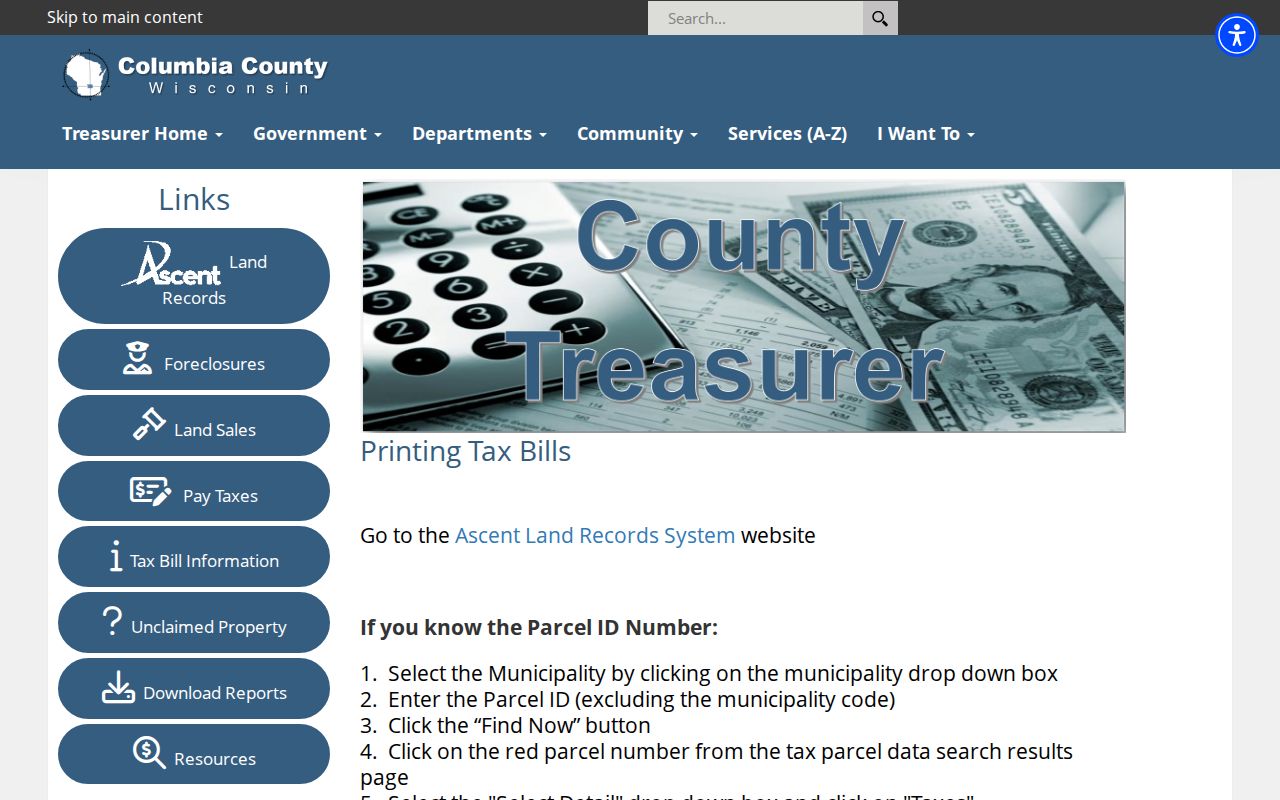
The tax year is the one control that keeps a current bill and a past payment record comparable.
Check Columbia County's Local Review Calendar
Open book and Board of Review are municipal assessment processes in Columbia County. No single countywide date covers every community. Each city, village, and town sets its own calendar. To get the right date and filing steps, read the notice issued by the municipality where the parcel sits. Then contact its assessor or clerk. A schedule from a neighboring community may not carry across the boundary. Before any meeting, pull together the assessment notice, the parcel identification, and solid facts about the property's description or value. A recorded sale can support your case. But bring the document and explain why it reflects the parcel in question. Ask the local office which evidence and format it accepts rather than guessing. Resolve missing dates from the local notice, never from an older calendar.
Check a Columbia County Tax Mailing Address
A tax notice can land at a mailing address that differs from the property's situs. Columbia County's Ascent FAQ notes that a mailing-address change does not take effect immediately. A bill may seem to have gone to the wrong place. In that case, compare both address fields in the parcel result. Then follow the county's current instructions for updating delivery information. A changed mailing address is not a deed. It does not transfer ownership of record. The split matters most at property edges. There, a postal city and the tax municipality refuse to line up. Ask a local treasurer or assessor for help. Cite the parcel's municipality along with its address. The public records law also allows a specific request to the office that holds a record. That request is subject to applicable exceptions.
Review a Columbia County Assessment
In Columbia County, municipal assessors handle local assessment work. They also run the open-book and Board of Review process. The county's land-information office coordinates parcel listings, assessment rolls, tax rolls, GIS, and survey records. Even so, the property-level review belongs to the local assessor. Assessment meeting dates are set locally. So confirm the current notice and filing steps with the municipality before building a challenge. When you prepare, compare the parcel's record against the assessment notice. Compare it also against the facts used to describe the property. A recorded sale can serve as evidence. It is not automatically the assessed number. Wisconsin Department of Revenue guidance requires that sales be checked for usability. Only then do they feed into assessment work. Keep the assessment year and the property description visible in any request you make.
Check the local calendar. The open-book and Board of Review dates are set through the municipal process. Contact the local assessor or clerk for the current notice, evidence rules, and filing deadline before relying on an old calendar.